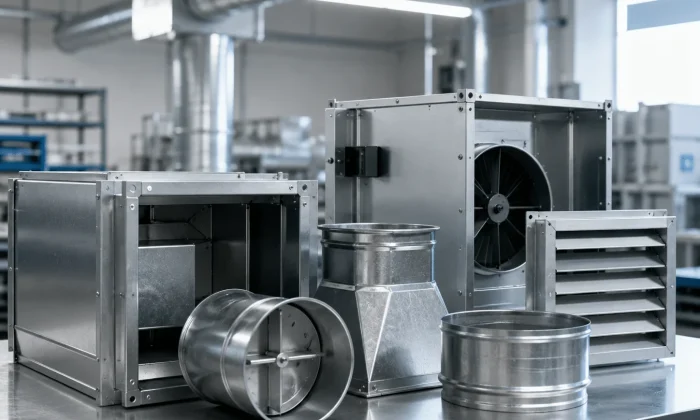
A dryer air duct assembly directs heated air through the appliance while also supporting motors, condensers or related components. Because it performs several functions at once, both individual part quality and final assembly quality must be controlled.
Dimensional inspection begins with the main mounting points. Motor locations, connection openings, sealing surfaces and fastening holes must match the surrounding appliance structure.
The internal airflow path should be free from excessive flash, deformation or assembly obstructions. Irregularities inside the duct may increase resistance, create turbulence or contribute to unwanted noise.
Sealing is another critical requirement. Joint surfaces, gaskets and assembled connections must prevent unnecessary air leakage. Leak testing can be used to confirm that the completed assembly meets the agreed performance requirement.
Where the duct also supports a motor or rotating component, alignment and structural stability must be verified. Mounting errors may create vibration or affect the operating position of the connected parts.
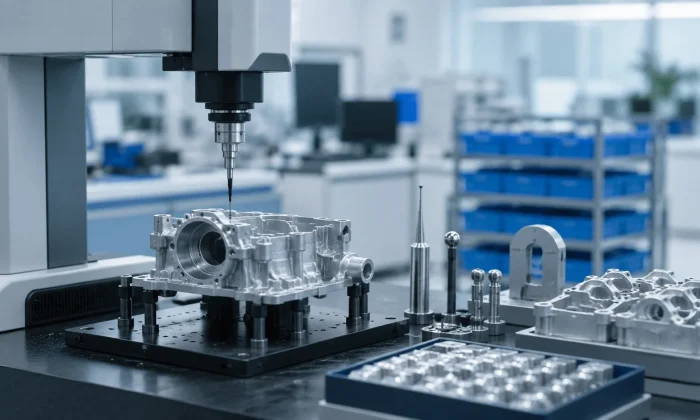
Coordinate measuring machines can be used to inspect complex geometries and the relationship between several mounting features. Assembly-fit testing provides an additional check by confirming compatibility with the complete dryer system.
The company’s technical materials describe the use of CAE analysis to optimize airflow, reduce resistance and control noise in dryer duct products. They also identify airtightness testing and CMM inspection as important final checks for completed assemblies.